
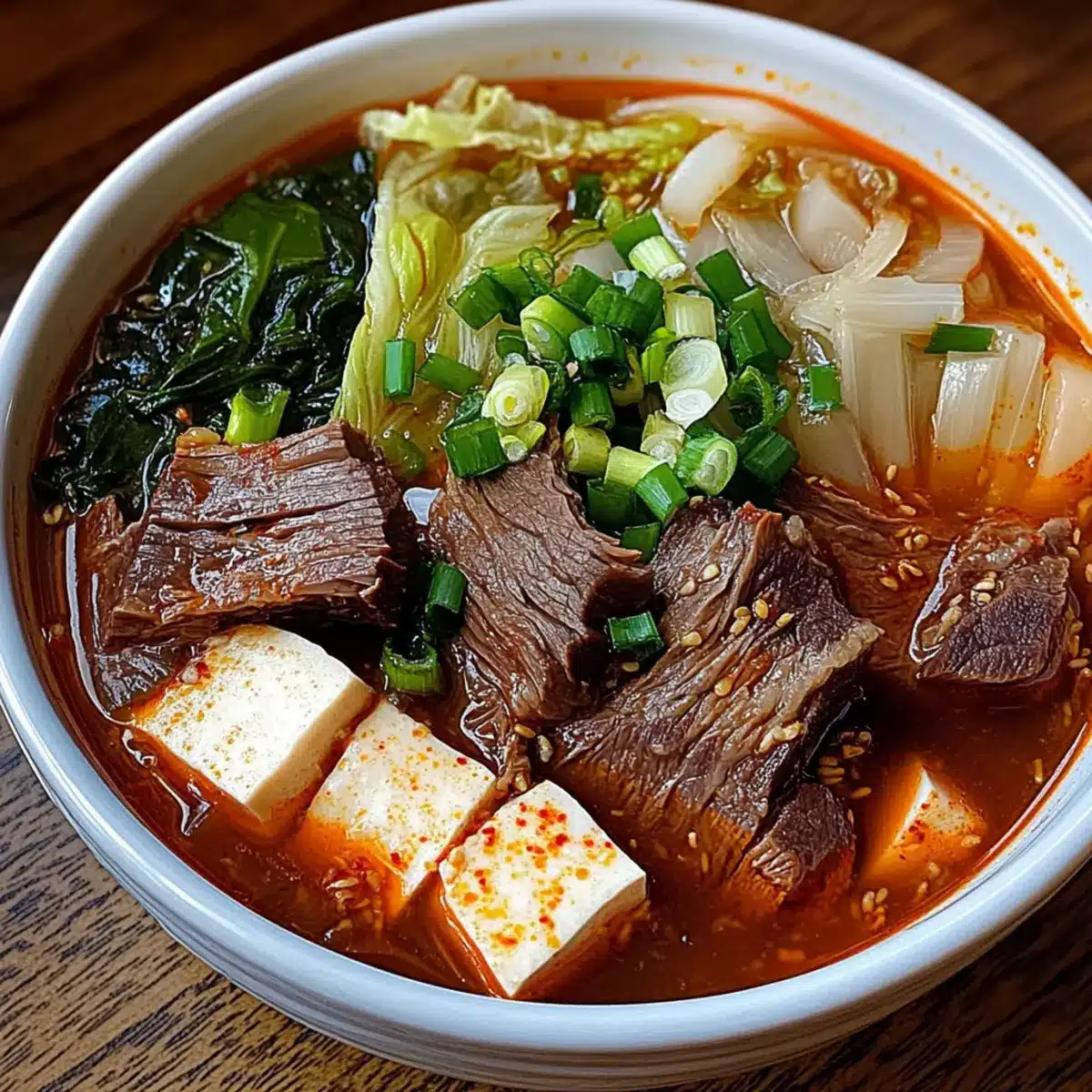
As the first chill of winter creeps in, there’s nothing quite like a bowl of Hearty Korean Winter Soup to wrap you in warmth. With tender beef brisket simmering in a spicy broth, this dish creates a delightful harmony of flavors that will transport you straight to the heart of Korean cuisine. Not only is this Korean Winter Soup a comforting crowd-pleaser, but it also allows for a personal touch; feel free to swap in your favorite veggies or proteins! Each spoonful reveals tender brisket and crispy napa cabbage, making it perfect for cozy nights spent indoors. Are you ready to cozy up with a bowl of heartwarming goodness? Let’s dive into the recipe!
Why is Korean Winter Soup irresistible?
Comforting, Hearty Ingredients: This recipe combines beef brisket, tofu, and crunchy vegetables to create a soul-warming dish perfect for cold weather. Flavorful Broth: The rich broth infused with gochujang offers a delightful spicy-sweet warmth that awakens the senses. Customizable Options: Feel free to swap the veggies or proteins, tailoring it to your taste. Quick Preparation: In under an hour, you’ll have a deliciously satisfying meal! If you love soothing soups, check out our Coconut Curry Soup or Baked Potato Soup for more cozy inspirations!
Korean Winter Soup Ingredients
• Explore the components of this comforting dish.
-
For the Broth
-
Beef Brisket – This cut offers rich flavor and tenderness; consider chuck roast or short ribs as alternatives.
-
Water – Creates the base for a flavorful broth to simmer all ingredients.
-
Soy Sauce – Adds salty umami depth; use low-sodium for a lighter option.
-
Korean Red Pepper Paste (Gochujang) – Infuses a spicy-sweet kick and vibrant color; substitute with miso and chili powder if needed.
-
Korean Red Pepper Powder (Gochugaru) – For that smoky heat; crushed red pepper flakes can stand in if necessary.
-
For the Aromatics
-
Garlic – Minced to impart aromatic depth to the broth.
-
Onion – Sweetens the broth offering a rounded flavor; shallots can be an interesting substitute.
-
For the Vegetables and Protein
-
Napa Cabbage – Adds crunch and absorbs the broth’s flavor; bok choy works as a great alternative.
-
Firm Tofu – Provides protein and a silky texture; opt for chicken or tempeh for non-vegetarian or vegan-friendly variations.
-
Daikon Radish – Offers sweetness and texture; regular radish or carrots can work well in its place.
-
Green Onions – Boosts freshness when sautéed and used as a garnish.
-
Finishing Touches
-
Sesame Oil – Great for sautéing aromatics and enhancing nuttiness; use olive oil for a different flavor.
-
Salt and Pepper – Essential to elevate the overall taste; adjust to suit your preferences.
-
Cooked White Rice – Serves as a filling side that absorbs the delicious broth beautifully.
Feel free to mix in your favorite veggies or proteins for a personalized touch!
Step‑by‑Step Instructions for Hearty Korean Winter Soup
Step 1: Prepare the Broth
In a large pot, combine the beef brisket with enough water to fully submerge the meat, typically around 8 cups. Bring the mixture to a boil over medium-high heat. Once boiling, reduce to a simmer and cook uncovered for about 30 minutes, until the brisket is tender and easily pierced with a fork, allowing the flavors to develop.
Step 2: Skim the Broth
After simmering, use a ladle to skim off any impurities and foam that have floated to the surface. This step is essential for achieving a clear, appetizing broth. Continue to simmer the remaining liquid gently, ensuring the beef brisket remains submerged as it continues to release its flavorful essence.
Step 3: Incorporate the Seasoning
Stir in soy sauce, gochujang, gochugaru, and minced garlic. Mix well to ensure the seasonings are evenly distributed throughout the broth. Allow these ingredients to simmer together for about 5 minutes, allowing the spicy-sweet notes of the gochujang to infuse the broth for your Korean Winter Soup.
Step 4: Add the Vegetables
Now, add the chopped onion, napa cabbage, tofu, and daikon radish to the pot. Stir gently to combine, making sure the vegetables are submerged in the rich broth. Cover and let the soup simmer for an additional 20 minutes, or until the vegetables are tender but still have a slight crunch, creating a delightful texture contrast.
Step 5: Sauté the Aromatics
In a small pan, heat a tablespoon of sesame oil over medium heat. Once hot, add the green onions and sauté for about 2-3 minutes until fragrant and slightly softened. This step enhances the overall aroma of the soup, amplifying its comforting essence as you transfer the sautéed green onions to the simmering pot.
Step 6: Final Seasoning Adjustments
Taste the soup and adjust with salt and pepper according to your preference. For added depth, consider a splash more soy sauce or a bit more gochugaru if you prefer more heat. Allow the Hearty Korean Winter Soup to simmer for an additional 5 minutes to meld the flavors before serving.
Step 7: Serve with Steamed Rice
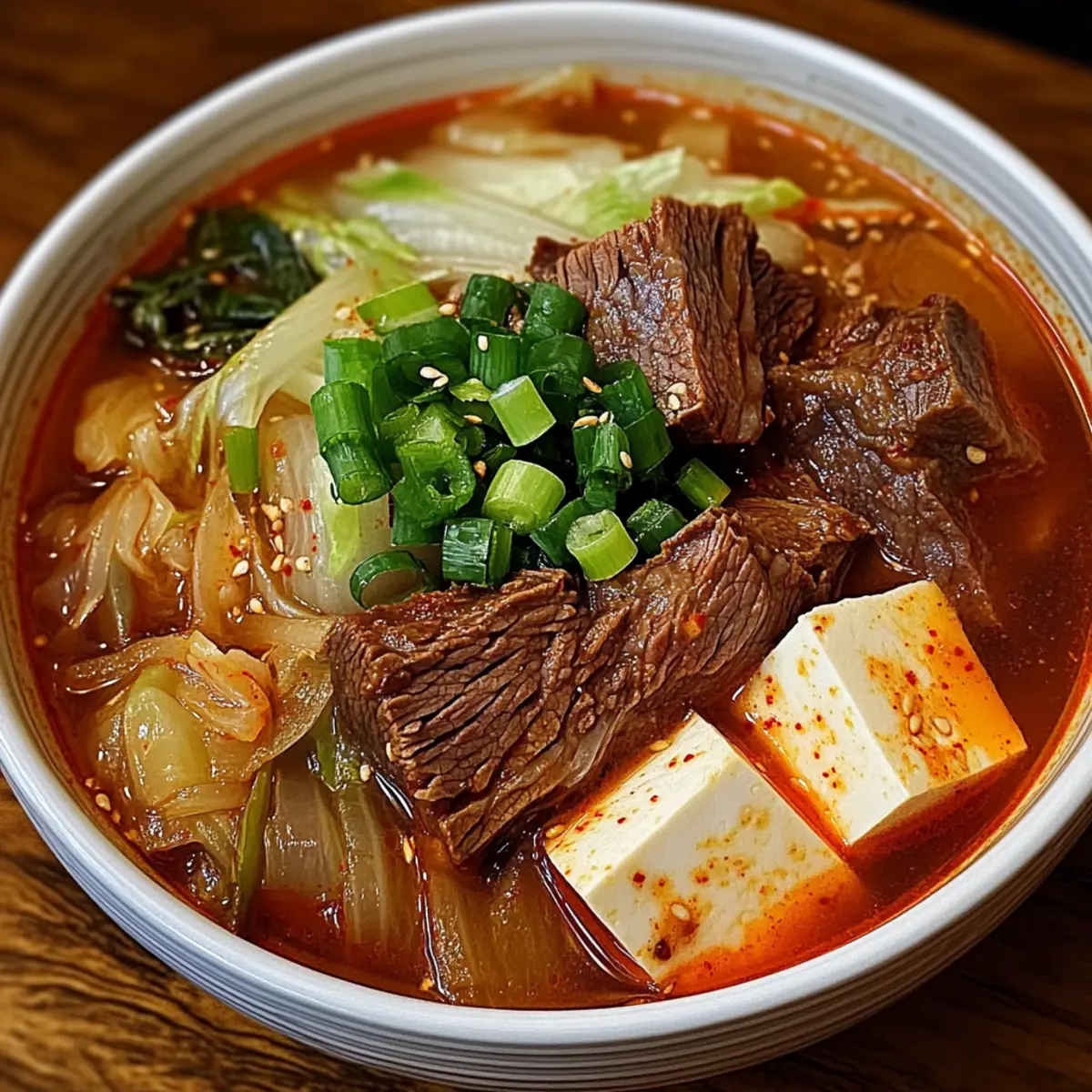
Ladle the steaming soup into bowls, ensuring an even distribution of beef, vegetables, and silky tofu. Accompany with a generous scoop of cooked white rice on the side, allowing everyone to soak up the delicious broth. Garnish with more green onions for a pop of color and freshness as you invite everyone to gather around for a warm, comforting meal.
Expert Tips for Korean Winter Soup
-
Broth Clarity: Skim impurities often, as this keeps your Korean Winter Soup looking vibrant and appealing. Clear broth enhances the overall experience!
-
Spice Control: Adjust the spice level gradually. Start with less gochugaru and taste before adding more, ensuring it suits your family’s preferences without overwhelming them.
-
Texture Matters: Don’t overcook the vegetables; they should remain crisp-tender. This balance adds delightful texture to your comforting soup.
-
Choose Quality Meat: Opt for beef brisket with good marbling for tenderness and flavor. Other cuts like chuck roast can work, but they will offer a different texture.
-
Let It Sit: Allow the soup to rest for a few minutes after cooking. This lets the flavors meld beautifully, creating an even more comforting dish.
-
Experiment Freely: Have fun mixing in seasonal vegetables to customize your Korean Winter Soup. Add mushrooms, zucchini, or spinach to elevate its nutritional value!
What to Serve with Hearty Korean Winter Soup
Warm up your dinner table with delightful sides that will complement the rich, spicy-sweet flavors of your cozy soup.
-
Steamed White Rice: This is the classic companion to your soup, soaking up the flavorful broth while adding a comforting, filling element to your meal.
-
Kimchi: The crunchy, fermented vegetables add a zesty contrast that brightens each spoonful of soup, enhancing the overall experience with its tangy kick.
-
Korean Pancakes: Crispy and savory, these pancakes offer a delightful texture that pairs beautifully with the smooth broth. Browning them to perfection creates a satisfying bite with every piece.
-
Pickled Vegetables: Their tangy crunch serves as a refreshing palate cleanser between rich bites of the soup, enhancing the dining experience with their vibrant flavors.
-
Sesame Spinach Salad: Bright and refreshing, this salad introduces a nutty component to the meal. Its lightness balances the soup’s robust warmth, making them a perfect mixture.
-
Cold Beer or Soju: For an authentic pairing, serve a chilled beer or a glass of soju. The crispness refreshes your palate while complementing the soup’s spices, creating a memorable meal.
-
Chocolate Mint Brownies: As a sweet finish, these brownies’ dense richness contrasts with the soup’s warmth, ensuring a delightful ending to your hearty meal.
These pairings will not only enhance your dining experience but make it a feast to remember!
Korean Winter Soup Variations & Substitutions
Feel free to get creative with this heartwarming soup and tailor it to your family’s tastes and dietary needs!
-
Protein Swap: Try swapping beef brisket for chicken thighs or tempeh for a lighter or plant-based option. Each offers a deliciously unique flavor profile.
-
Extra Veggies: Add mushrooms, zucchini, or fresh spinach to boost the nutritional value and add texture to your soup. The earthy flavors of mushrooms complement the broth beautifully.
-
Spice Level: If you need it milder, reduce the gochugaru and replace it with sweet paprika for that lovely color without too much heat. You could also try a sprinkle of sugar to balance flavors.
-
Noodle Addition: For a heartier meal, toss in some cooked udon or rice noodles as a filler. They will soak up the flavorful broth and provide a delightful chewiness.
-
Herb Boost: Mix in fresh herbs like cilantro or basil right before serving for an added layer of freshness. This simple touch elevates the flavor profile exquisitely.
-
Vegetable Broth: For a vegetarian twist, substitute water with vegetable broth for a deeper flavor that still complements all the ingredients beautifully.
-
Fermented Flavor: Serve your soup with a side of kimchi or pickled vegetables to create a delightful contrast of flavors. Adding a spoonful of kimchi directly into the soup can enhance its depth.
Remember, each spoonful can tell a new story. If you enjoy textured soups, you might also delight in our Roasted Poblano Soup or for something creamy, the Potato Cheese Soup could warm your heart! Happy cooking!
Make Ahead Options
These Hearty Korean Winter Soup options are perfect for busy home cooks looking to save time! You can prep the beef brisket and broth base up to 24 hours in advance by simmering and storing it in an airtight container in the fridge. Additionally, chop the vegetables—napa cabbage, daikon radish, and green onions—and refrigerate them separately for up to 3 days to maintain their freshness. When you’re ready to enjoy, simply reheat the broth, add the vegetables and tofu, and let everything simmer together until heated through, ensuring a comforting bowl of deliciousness with minimal effort. Enjoy the warmth of homemade goodness without the last-minute rush!
How to Store and Freeze Korean Winter Soup
-
Fridge: Store leftovers in an airtight container for up to 3 days. Reheat gently on the stove over low heat, adding a splash of water if the soup thickens.
-
Freezer: Freeze Korean Winter Soup for up to 3 months in airtight containers. Portion into individual servings for quick meals; thaw overnight in the fridge before reheating.
-
Reheating: When reheating, heat on the stove over medium-low heat until warmed through. Stir occasionally, and adjust seasoning if necessary.
-
Thawing: For best results, thaw frozen soup in the fridge overnight before reheating to maintain its rich flavors and texture.
Hearty Korean Winter Soup Recipe FAQs
What type of beef is best for Korean Winter Soup?
For this soup, beef brisket is ideal as it offers rich flavor and tenderness. If you’d like to experiment, chuck roast or short ribs can also be used, but the overall texture and taste may differ slightly.
How long can I store leftovers in the fridge?
You can store your Hearty Korean Winter Soup in an airtight container for up to 3 days. When reheating, do so gently over low heat on the stove, adding a little water if it thickens too much.
Can I freeze Korean Winter Soup?
Absolutely! This soup freezes beautifully for up to 3 months. To do this, let the soup cool completely, then pour it into airtight containers or freezer bags. Portioning into single servings is a great idea for quick meals! Thaw overnight in the fridge before reheating.
What if my soup is too spicy?
If your Hearty Korean Winter Soup ends up too spicy for your liking, don’t worry! You can balance it out by adding more broth or a sweetener like a touch of honey or sugar to tone down the heat. Adding more vegetables or tofu can also help absorb some of that spice.
Can I use other vegetables in this soup?
Very much so! Feel free to incorporate other veggies like mushrooms, zucchini, or spinach to elevate the nutritional value and flavor of the Hearty Korean Winter Soup. You can also replace napa cabbage with bok choy or regular cabbage for a different texture.
Is this soup safe for my pets?
While the Hearty Korean Winter Soup is delicious for humans, it’s not safe for pets. Ingredients like onions and garlic can be harmful to dogs and cats. Always keep pet diets in mind when preparing meals and opt for pet-friendly alternatives if necessary.
Hearty Korean Winter Soup to Warm Your Soul This Season
Ingredients
Equipment
Method
- In a large pot, combine the beef brisket with enough water to fully submerge the meat, typically around 8 cups. Bring to a boil over medium-high heat, then reduce to a simmer for about 30 minutes until tender.
- Use a ladle to skim off impurities and foam that have floated to the surface. Continue to simmer the broth gently.
- Stir in soy sauce, gochujang, gochugaru, and minced garlic. Simmer for about 5 minutes.
- Add onion, napa cabbage, tofu, and daikon to the pot. Stir gently, cover, and let simmer for an additional 20 minutes.
- In a small pan, heat sesame oil and sauté green onions for 2-3 minutes until fragrant.
- Taste the soup and adjust with salt and pepper. Allow to simmer for an additional 5 minutes.
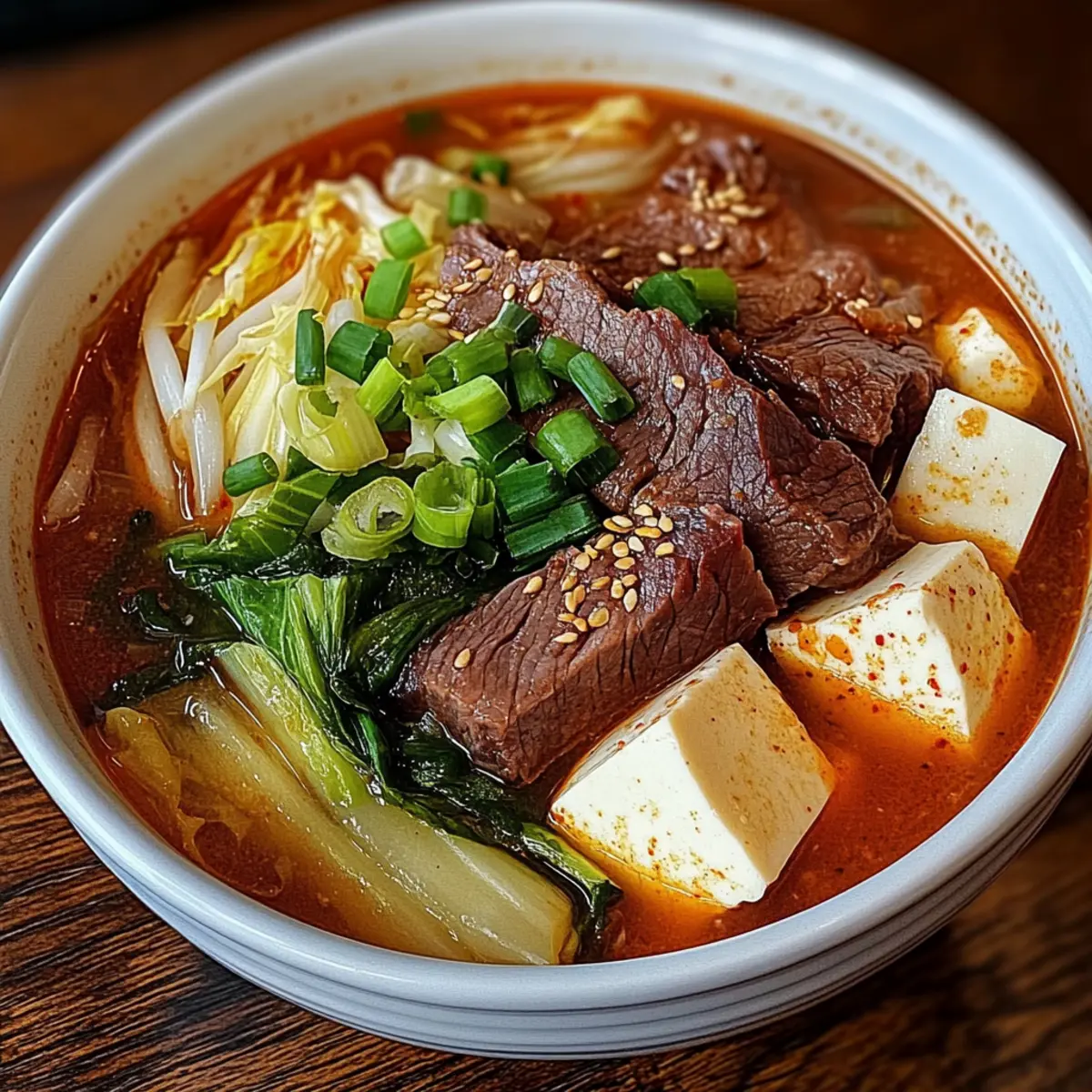
- Ladle the soup into bowls, serve with cooked white rice, and garnish with green onions.
Leave a Reply